
Guide
How Long a Speeding Ticket Affects Insurance
The three-year insurance lookback, how it differs from the state's record and points periods, and when a ticket stops affecting your premium.

By Chloe Martin · Staff Writer
Published · Updated
Answer in brief
Most insurers surcharge a speeding ticket for three years from the conviction date; a few use five years for major violations. That is separate from how long the ticket stays on your state driving record (commonly 3–5 years; longer for serious offences) and from how long points remain active (often 1–3 years). After the lookback ends, the ticket has no effect on your premium—and a new insurer with a three-year lookback will not see it at all.
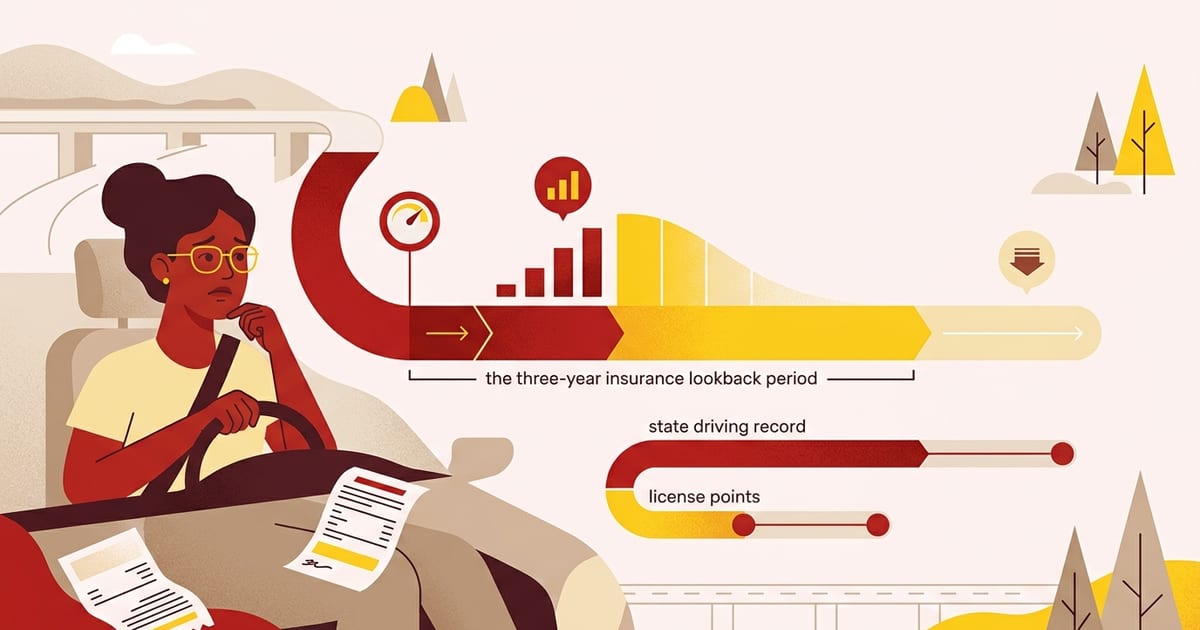
| Clock | Typical length | Starts |
|---|---|---|
| Insurer surcharge | 3 years (5 for major) | Conviction date |
| State driving record | 3–5 years; up to 10 for serious | Conviction date |
| Points active | 1–3 years | Conviction or offence date |
Why the conviction date matters
If you contest a ticket and are convicted eight months later, the three-year clock starts at that conviction, not the stop. Pleading quickly starts the clock sooner; contesting may dismiss or reduce the charge. Weigh both.
Using the clock
Note the conviction date. Shop a month before the renewal that falls after the three-year mark; your current insurer should drop the surcharge, and competitors will quote you as clean.
Questions & answers
How long does a speeding ticket stay on insurance?
Three years with most insurers, from the conviction date.
Does the ticket fall off automatically?
The surcharge ends at the renewal after the lookback; verify it on the renewal notice.
Is the insurance period the same as the state record period?
No. The state record often keeps it longer, but insurers rate only within their own lookback.
Terms used in this guide
- Lookback period
- How far back an insurer considers violations—typically three years, five for major.
- Conviction date
- The date you paid, pleaded or were found guilty; starts the insurance lookback.
- Licence points
- State-assigned values for violations used for licence discipline; insurers mostly rate on the violation itself.
Sources and references
Legal figures on this page (minimum limits, filing periods, statutory benefits) are checked against the primary law or the state insurance regulator listed below. Links and figures last verified Nov 2026.
- Speed — Insurance Institute for Highway SafetyIndependent researchHow speed raises crash likelihood and severity; speed-limit and enforcement research.
- What determines the price of an auto insurance policy? — Insurance Information InstituteConsumer guidanceRating factors: driving record, mileage, location, age, gender, vehicle, credit-based insurance score, coverage choices. Notes ZIP-code rating is prohibited in California and Michigan and gender rating is prohibited in seven states.
- Consumer insurance information — National Association of Insurance CommissionersConsumer guidancePlain-language guides from the body of state insurance regulators; links to every state's insurance department and complaint process.
Practical guidance on this page is original editorial work. Cited sources support factual statements and do not endorse this site. Dollar ranges described as typical or illustrative are editorial estimates, not figures from these sources.
Guide
How Much Car Insurance Goes Up After a Speeding Ticket
Typical premium increases after a speeding ticket by speed over the limit, why some tickets cause no increase, and how insurers differ.
Guide
Driver's Licence Points and Your Insurance
How state point systems work, how insurers use (or ignore) points, the difference between state points and insurer points, and point-reduction options.
Guide
How to Compare Car Insurance Quotes After a Speeding Ticket
A method for comparing quotes with a ticket on your record: fix coverage, disclose accurately, quote widely, use discounts, and time the re-shop.