
Guide
When and How Your Insurer Finds Out About a Ticket
Insurers pull driving records at renewal and quoting, not daily. How that timing works, whether you must disclose, and what happens if a ticket is missed.

By Brandon Lee · Editor
Published · Updated
Answer in brief
Insurers do not receive tickets in real time. They pull your motor vehicle record when you apply, at renewal, and sometimes on a periodic schedule—so a ticket surfaces at the first renewal after the conviction posts. You are generally not required to report a ticket mid-term, but you must answer accurately on any application. If an insurer misses a ticket, it will catch it at a later pull; a missed ticket is not forgiven, only delayed.
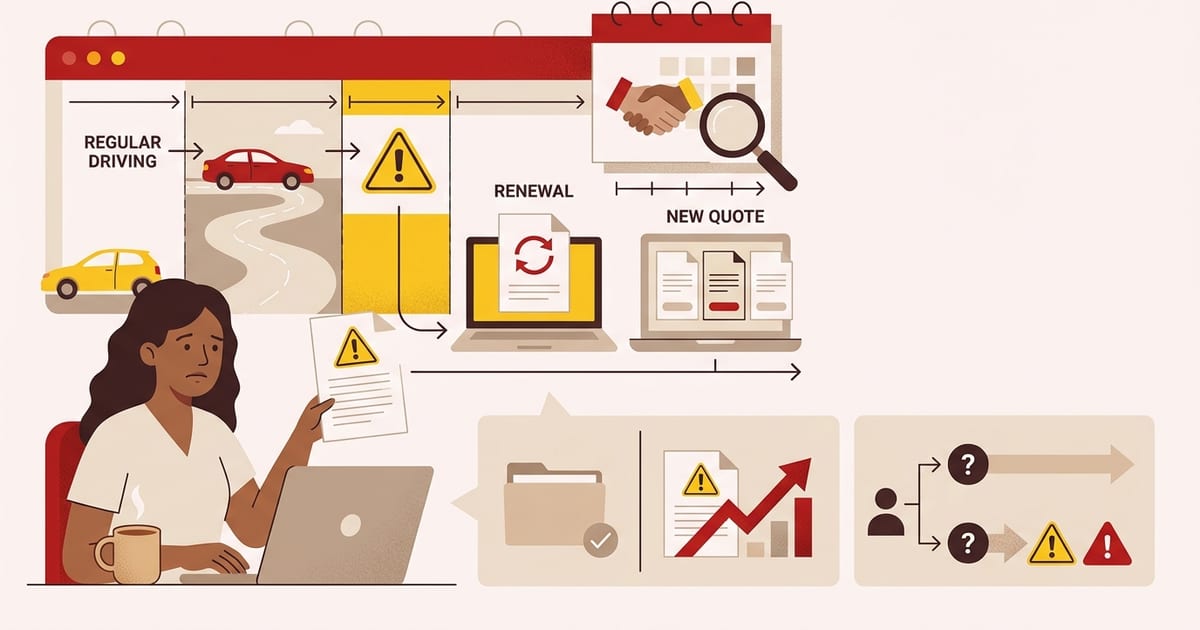
The sequence
- 1
Citation
Not on your record yet.
- 2
Conviction
Payment, plea or court finding—posts to the state record within days to weeks.
- 3
Insurer pulls record
At renewal (every 6–12 months) or quoting; some insurers also subscribe to monitoring services.
- 4
Surcharge at renewal
Applied to the next term after the pull.
Disclosure
Mid-term, policies do not usually require you to volunteer a ticket. Applications do ask—answer accurately; a false answer is a material misrepresentation that can void coverage. Quoting with a new insurer always involves a record pull.
If it seems they missed it
Some insurers pull records only every other renewal to save cost. The surcharge arrives when they do pull. Do not count on it being missed when comparing insurers—every new quote pulls the record.
Entries in this guide
Specific questions answered in more depth.
Questions & answers
Do I have to tell my insurance company about a speeding ticket?
Not usually mid-term. You must answer accurately on applications.
How long until my insurer knows about my ticket?
At the first renewal after the conviction posts—weeks to months.
Can my insurer raise my rate mid-term for a ticket?
No. Rate changes apply at renewal.
Terms used in this guide
- Motor vehicle record (MVR)
- Your state driving record, which insurers pull at quoting and renewal.
- Conviction date
- The date you paid, pleaded or were found guilty; starts the insurance lookback.
- Material misrepresentation
- A false statement on an application that would have changed the insurer's decision; grounds to void coverage.
Sources and references
Legal figures on this page (minimum limits, filing periods, statutory benefits) are checked against the primary law or the state insurance regulator listed below. Links and figures last verified Nov 2026.
- Speed — Insurance Institute for Highway SafetyIndependent researchHow speed raises crash likelihood and severity; speed-limit and enforcement research.
- What determines the price of an auto insurance policy? — Insurance Information InstituteConsumer guidanceRating factors: driving record, mileage, location, age, gender, vehicle, credit-based insurance score, coverage choices. Notes ZIP-code rating is prohibited in California and Michigan and gender rating is prohibited in seven states.
- Consumer insurance information — National Association of Insurance CommissionersConsumer guidancePlain-language guides from the body of state insurance regulators; links to every state's insurance department and complaint process.
Practical guidance on this page is original editorial work. Cited sources support factual statements and do not endorse this site. Dollar ranges described as typical or illustrative are editorial estimates, not figures from these sources.
Guide
How Long a Speeding Ticket Affects Insurance
The three-year insurance lookback, how it differs from the state's record and points periods, and when a ticket stops affecting your premium.
Guide
How Much Car Insurance Goes Up After a Speeding Ticket
Typical premium increases after a speeding ticket by speed over the limit, why some tickets cause no increase, and how insurers differ.
Guide
Your First Speeding Ticket and Insurance
What to expect after a first speeding ticket—whether insurers surcharge it, what to do before paying, traffic school, and how to minimise the effect.