
Guide
How to Compare Car Insurance Quotes After a Speeding Ticket
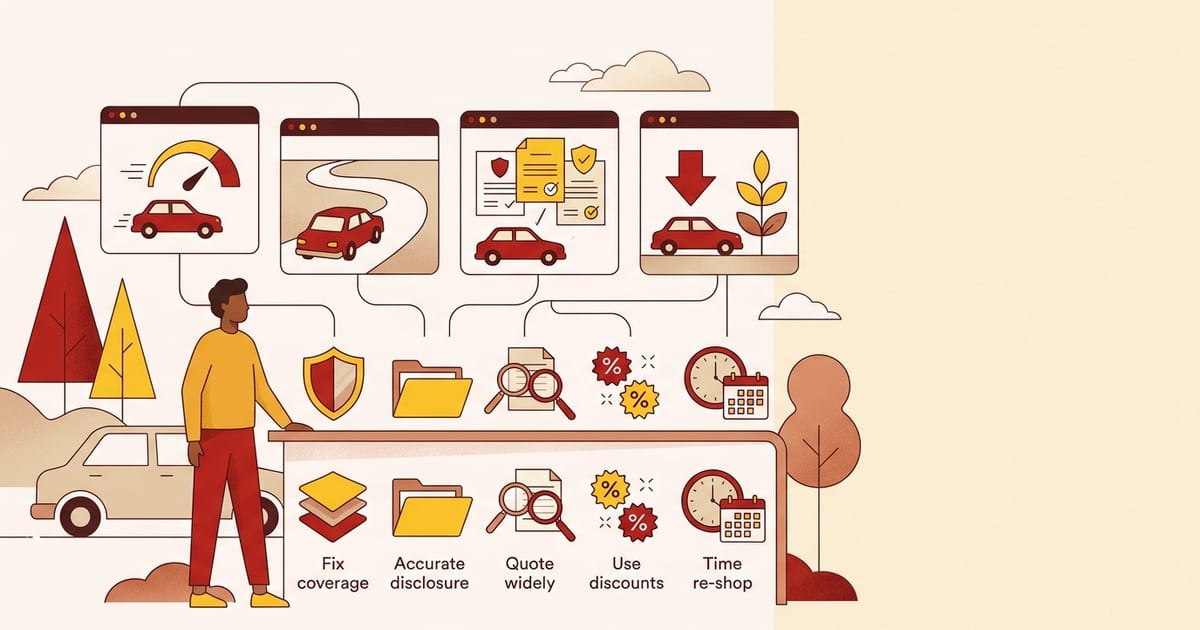
A method for comparing quotes with a ticket on your record: fix coverage, disclose accurately, quote widely, use discounts, and time the re-shop.

By Chloe Martin · Staff Writer
Published · Updated
Answer in brief
Insurers disagree about tickets more than about almost anything else: one may ignore a single minor violation, another may add 25%. So compare by fixing coverage, disclosing accurately (they pull the record anyway), gathering four to six quotes, asking about defensive driving and telematics discounts, and normalising to annual total. Then re-shop at the three-year anniversary of the conviction. The spread for a driver with one ticket is often $400–$900 a year.
- 1
Confirm the record
Pull your driving record; confirm the ticket, date and whether traffic school masked it.
- 2
Fix the coverage
Liability 100/300/100 if possible, UM to match, physical damage with chosen deductibles.
- 3
Quote four to six
Comparison tool plus two direct.
- 4
Ask about discounts
Defensive driving course, telematics, pay-in-full, bundling.
- 5
Normalise
Annual total with fees.
- 6
Calendar the anniversary
Three years from conviction; re-shop then.
Quote finder
Find auto insurance quotes that fit your situation
Questions & answers
Who has the cheapest insurance with a speeding ticket?
It depends on your state and profile; compare several—the spread is wide.
Do I have to disclose the ticket when getting quotes?
Yes. Insurers pull your record; omissions can void coverage.
Do quotes affect my credit?
No. Insurance quotes use soft inquiries.
Terms used in this guide
- Premium
- The price of a policy, per six or twelve months.
- Motor vehicle record (MVR)
- Your state driving record, which insurers pull at quoting and renewal.
- Telematics
- App or device-based pricing on actual driving; can offset a record.
Sources and references
Legal figures on this page (minimum limits, filing periods, statutory benefits) are checked against the primary law or the state insurance regulator listed below. Links and figures last verified Nov 2026.
- Speed — Insurance Institute for Highway SafetyIndependent researchHow speed raises crash likelihood and severity; speed-limit and enforcement research.
- Nine ways to lower your auto insurance costs — Insurance Information InstituteConsumer guidanceShop at least three quotes; raising a deductible from $200 to $500 can cut collision/comprehensive cost 15–30%, $1,000 can save 40%+; drop physical damage on cars worth under 10× the premium; bundling, low-mileage and good-student discounts.
- Consumer insurance information — National Association of Insurance CommissionersConsumer guidancePlain-language guides from the body of state insurance regulators; links to every state's insurance department and complaint process.
- What determines the price of an auto insurance policy? — Insurance Information InstituteConsumer guidanceRating factors: driving record, mileage, location, age, gender, vehicle, credit-based insurance score, coverage choices. Notes ZIP-code rating is prohibited in California and Michigan and gender rating is prohibited in seven states.
- Car insurance — Consumer ReportsConsumer guidanceIndependent testing organisation's guides to comparing policies and insurers.
- Auto insurance basics — United PolicyholdersConsumer guidancePlain-language coverage explanations from a policyholder-advocacy non-profit.
Practical guidance on this page is original editorial work. Cited sources support factual statements and do not endorse this site. Dollar ranges described as typical or illustrative are editorial estimates, not figures from these sources.
Guide
How Much Car Insurance Goes Up After a Speeding Ticket
Typical premium increases after a speeding ticket by speed over the limit, why some tickets cause no increase, and how insurers differ.
Guide
Traffic School and Defensive Driving Courses After a Ticket
How traffic school can keep a ticket off your insurance record, who is eligible, how often you can use it, the course discount, and the cost-benefit.
Guide
How Long a Speeding Ticket Affects Insurance
The three-year insurance lookback, how it differs from the state's record and points periods, and when a ticket stops affecting your premium.